
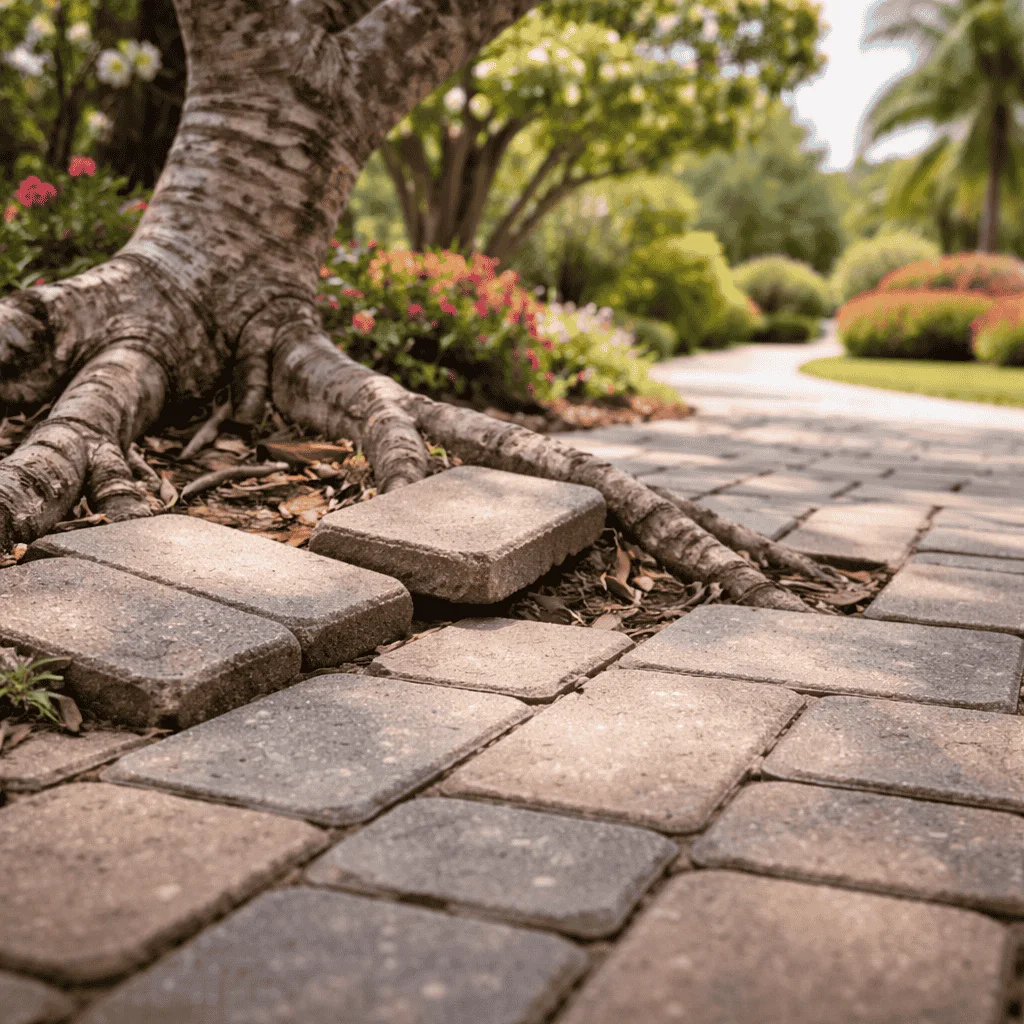
What Causes Uneven Pavers?
Pavers can become uneven because of soil settlement, poor drainage, inadequate compaction, or heavy traffic. Over time, these conditions may weaken the supporting base.
Additionally, tree roots and erosion can cause individual pavers to rise or sink. Identifying the underlying problem is essential before beginning repairs.
Inspect the Damaged Area
Start by examining the affected surface. Look for sunken sections, loose materials, cracked pavers, and standing water.
Check whether the damage affects a few individual pavers or a larger area. Widespread movement may indicate drainage or foundation problems requiring professional attention.
Remove and Reset Uneven Pavers
For minor problems, individual pavers may be carefully removed and reset.
The repair process generally involves:
Removing affected pavers without damaging surrounding materials.
Inspecting the underlying base for settlement or erosion.
Correcting the base using suitable materials and proper compaction.
Reinstalling the pavers at the correct height.
Restoring joint sand and checking surface alignment.
However, repairs should address the cause of movement rather than simply covering uneven areas with additional sand.
Improve Drainage Around Paved Surfaces
Poor drainage is a common contributor to shifting pavers in St. Petersburg, FL.
When rainwater collects beneath or around paved areas, erosion may gradually weaken the supporting materials.
Proper grading and drainage improvements help manage water movement. Depending on the property, additional drainage solutions may be necessary.
Replace Cracked or Damaged Pavers
Some uneven surfaces also contain cracked or broken materials.
Replacing damaged pavers can restore a more consistent appearance and reduce potential tripping hazards.
Choose replacement materials that match the existing installation whenever possible. Proper alignment and joint spacing are also important.
Prevent Future Paver Movement
Regular maintenance helps identify problems before they become extensive.
Sweep away debris, inspect joint sand, and monitor areas where water collects. Additionally, avoid placing excessive loads on surfaces not designed for heavy traffic.
Addressing small changes early can help maintain your paved area's stability.
When Should You Call a Professional?
Professional assistance is recommended when pavers continue sinking, large sections become uneven, or drainage problems persist.
At St. Petersburg Pavers, we help homeowners explore repair options for driveways, patios, walkways, and pool decks.
Proper evaluation and preparation help restore attractive, functional outdoor surfaces.
The Concrete Masonry & Hardscapes Association provides interlocking concrete pavement maintenance guidelines (opens in new tab), explaining how settlement, damaged pavers, and joint deterioration can affect pavement performance and require corrective maintenance.
The Federal Highway Administration provides fhwa.dot.gov (opens in new tab)" rel="noopener" target="_blank">guidance on pavement foundation design (opens in new tab), helping property owners understand how underlying soil conditions and foundation stability can influence the performance of paved surfaces.